
Baikal deep-sea neutrino telescope Baikal-GVD
INR RAS - Baikal deep-sea neutrino telescope Baikal-GVD.
Status 2019 and prospects.
The launch in 2015 of the first cluster of the Baikal deep-sea neutrino telescope, Baikal-GVD [1], opened a new stage in the creation of a neutrino telescope in Lake Baikal with a volume of about 1 cubic kilometer. The research stage of developing all the elements of the telescope and its mounting unit - a cluster of 8 garlands - was completed, and the way was opened for the systematic expansion of the telescope by installing from one to two clusters per year. In 2019, 5 clusters have already been put into operation [2]. Figure 1 shows the growth of the effective volume of the telescope for recording showers (cascades) of charged particles resulting from the interaction of neutrinos and secondary muons with an aqueous medium in the energy range 100 TeV - 10 PeV, the Cherenkov glow of which is recorded by the telescope. The green and red lines indicate the effective volumes of the ANTARES and IceCube telescopes, respectively. The blue line indicates the achieved level of the effective volume of Baikal-GVD and the intermittent line indicates the planned level in subsequent years. Data on the KM3NeT neutrino telescope being built by the European Union in the Mediterranean Sea is not provided due to technical difficulties encountered in deploying telescope systems and the lack of confirmed experimental data.
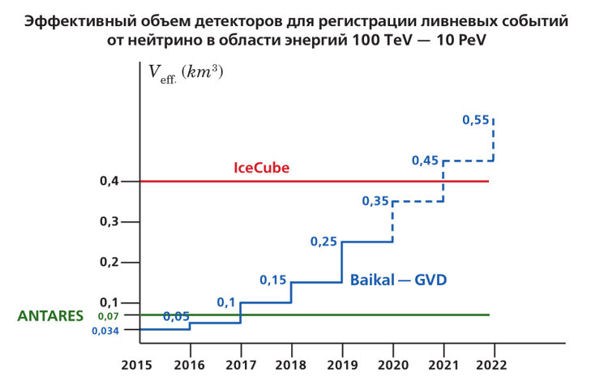
Figure 1. Increase in the effective volume of the Baikal-GVD telescope as a result of the installation of new clusters
The increase in the flow of experimental data and the growth in the number of collaboration participants have generated the need to standardize data presentation formats and software for their processing. Therefore, simultaneously with the expansion of the telescope, the development of a platform for analyzing data from the Baikal neutrino telescope BARS (Baikal Analysis and Reconstruction Software) was carried out. BARS contains definitions of data representations received from the telescope trigger system, acoustic positioning and monitoring system, definitions of formats for describing muon trajectories and the results of their reconstruction, etc., as well as tools for reading and writing them. For these standards, BARS provides a library containing low-level and high-level analysis methods. In particular, methods for isolating pulses on digitized PMT tracks, time and charge calibration, noise suppression, muon trajectory reconstruction, visualization, etc. Finally, BARS includes a package of application programs designed to perform common tasks, for example, suppressing noise in calibrated data or determining the noise rate of counting installation channels in a given period of time.
BARS is based on the MARS package of the MAGIC collaboration, as well as the CERN ROOT platform, developed for the needs of the Large Hadron Collider. Currently, in addition to analysis, BARS is used for stream preprocessing of telescope data at the JINR facilities (Dubna). Work is underway to further automate higher-level analysis.
The Baikal-GVD telescope of 5 clusters is currently the second largest neutrino telescope after IceCube, but has a significantly better angular resolution than IceCube (3-4° compared to 13-14° for recording cascades), so the data obtained now recording cascades and trajectories of muons caused by high-energy neutrinos and searching for their sources are certainly among the world-class achievements.
Figure 2 shows one of the probable schemes for the interaction of neutrinos with the medium and the zones of illumination by Cherenkov light of the optical modules of the Baikal-GVD telescope cluster. Seven garlands are located at the vertices of a regular heptagon and the eighth in its center. Each garland has 36 optical modules. The garlands are located at a distance of 60 m from each other, the optical modules are located at a distance of 15 m from each other vertically at a depth of 785 m to 1250 m. All five clusters are completely identical. Their centers are located at a distance of 300 m from each other (Figure 3).
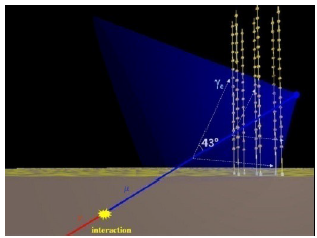
Figure 2. One of the probable schemes for the interaction of neutrinos with the medium and illumination of optical modules
one of the clusters of the Baikal-GVD telescope with Cherenkov light.
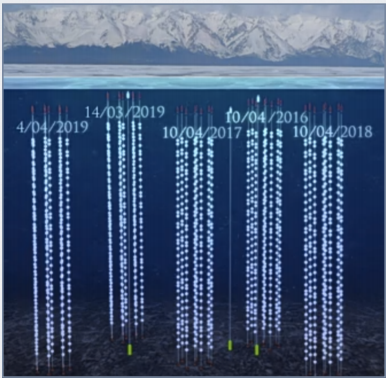
Figure 3. Five clusters of the Baikal-GVD telescope
The formation of a cascade can occur both inside and outside the physical volume of the cluster, therefore the effective volume of the cluster and the entire telescope as a whole significantly exceeds its physical volume, which is determined by the properties of Baikal water: long absorption and scattering lengths of light (20-25 m). These same characteristics determine the increased angular resolution of the Baikal telescope.
Table 1 shows preliminary results of data processing for 2016, 2018 and 2019. The vast majority of events are associated with neutrinos of atmospheric origin, but 6 of them with energies greater than 100 TeV are most likely of astrophysical origin, i.e. came to Earth from deep space.
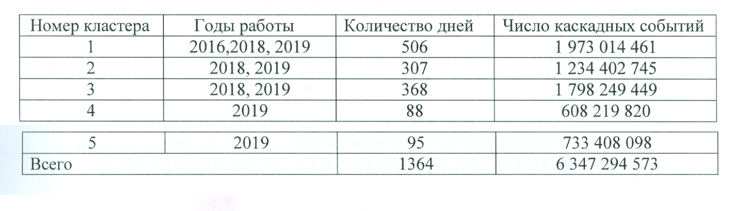
Table 2 presents the results of processing and isolating events by energy value and only those events that resulted in the illumination of more than 10 optical modules (OM), more than 14, and more than 19. Naturally, the more illuminated OMs, the more accurately the energy and direction of the event trajectory.
Table 2. Results of processing and selection of events

Figure 4 shows the distribution of identified and reconstructed cascade formation points in space inside and outside five telescope clusters with E > 60 TeV and illumination of more than 7 OM.
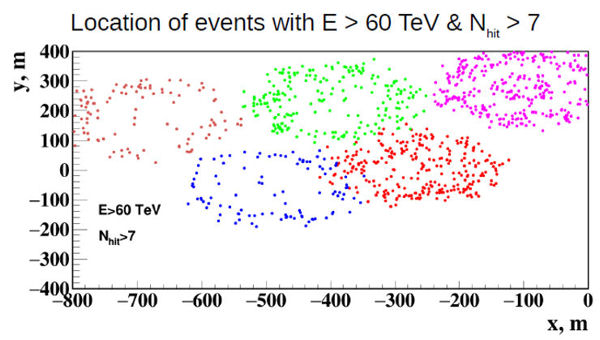
Figure 4. Spatial distribution of identified events
Figure 5 shows the points - the tops of identified cascade events with an energy of more than 100 TeV and the number of illuminated modules of more than 19. The absence of events in clusters 4 and 5 is explained by the insufficient amount of processed data.
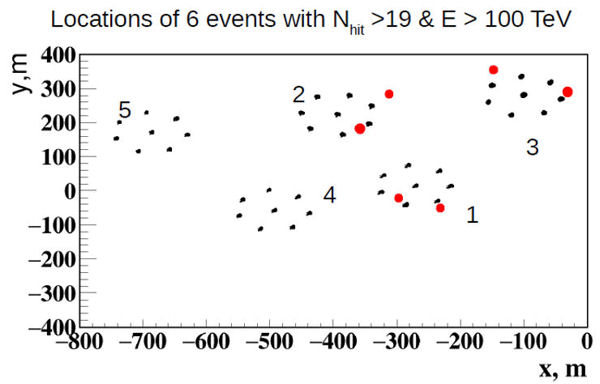
Figure 5. Locations of the vertices of 6 identified cascade events with E > 100TeV
Figure 6 shows the pattern of illumination of the optical modules of the telescope cluster with Cherenkov light from a cascade of charged particles. The cascade has energy E=157 TeV with coordinates θ=57°, φ=249°, x= -25 m, y= -37 m, z=11 m, ρ=44 m. On the left - all illuminated OMs (triggered channels) during a period of time, the beginning of which is initiated by a trigger - the recording start signal, if at least 6 channels (OM) are activated simultaneously. On the right is the number of channels after data processing (removing background and noise triggering channels).
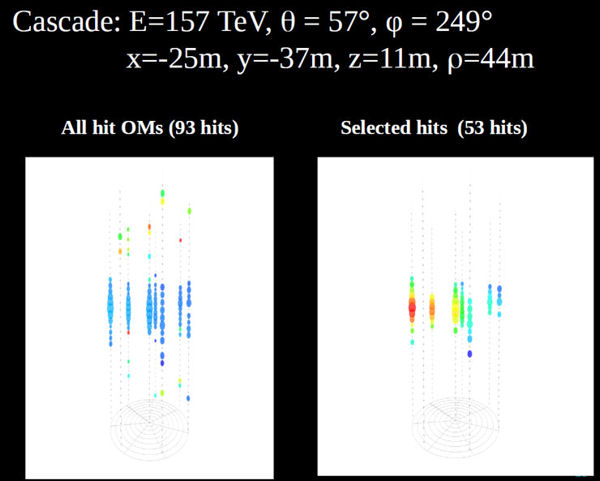
Рисунок 6.
Using the accumulated data, work continues to study the nature of the dark matter phenomenon. Search results in this direction were obtained and several articles were published that arouse undoubted interest and citation of the findings by the scientific community [3-5].
Since December 2018, the Baikal collaboration began to participate in a new international scientific direction of research in astronomy and astrophysics: “multi-messenger”. This direction uses the rapid exchange of information in the event of observing rare events at any of the installations that record neutrinos, cosmic rays, gravitational waves, and photons. In accordance with the adopted agreement between the Baikal and ANTARES collaborations, the “alert” event information generated when registering high-energy neutrinos in the ANTARES deep-sea telescope is received by the Baikal collaboration in less than 12 seconds. 24 “alerts” have already been received for the 2018-2019 season. At least one of the cascades with an energy of about 10 TeV, recorded in cluster 3, is very close in time (37.8 min) and observation angle (3.7°) to the “alert” event. Now our reaction to an “alert” is 24 hours. Developments are underway to radically reduce this time.
Since 2015, the efficiency of the telescope has been significantly increased, thanks to the use of the latest microchips (Spartan 6), multi-channel high-speed ADCs, and fiber-optic communication lines between the telescope clusters and the Coastal Center. This has reduced the dead time by orders of magnitude when collecting, processing “on line” and transmitting data. As a result, the number of events recorded by the telescope corresponds to model calculations and is no worse than in the IceCube and ANTARES telescopes in terms of effective volumes - for high-energy astrophysical neutrinos - about 3-4 events per year per effective volume of 0.4 km3.
To ensure the planned expansion of the telescope, technologies were developed and serial production of up to 1000 optical modules per year was established at the production site at JINR (Dubna) (Figure 7).
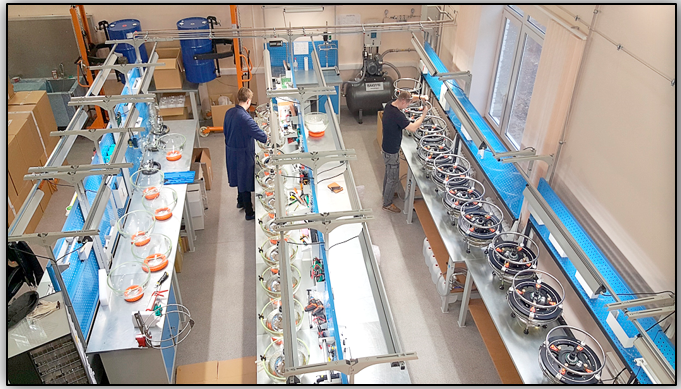
Figure 7. Installation lines for optical modules at JINR (Dubna)
The production of up to 100 electronic control modules has been established at the production site of LNAVE (INR RAS). Test bench systems were put into operation at JINR (Dubna) and at INR RAS. The production of up to 300 connecting deep-sea cables has been established at the NIIPF ISU, equipment for conducting ice work, laying bottom cables and mounting frames for deep-sea modules at the NN GTU (Nizhny Novgorod). Contacts and supply schedules for unique components from abroad and from domestic manufacturers were established: high-pressure glass spheres from Germany, Hamamatsu photomultipliers from Japan, power supplies from Taiwan, optical gel from Germany, electronic printed circuit boards and blocks from SINP MSU, magnetic screens from Ryazan, hydroacoustic modems from Germany, semiconductor pulsed lasers from Moscow, deep-sea electrical connectors from the USA, tip housings (couplings) of bottom trunk opto-electric cables from Dubna. Difficulties with the supply of cable products from Russian manufacturers have been and are being overcome.
In the process of increasing the number of clusters, research continues in the direction of increasing the efficiency of the telescope as a whole and its elements, without affecting their basic components. Of these, the most pressing problem is increasing the reliability of deep-sea devices and communications that are difficult to access for repair. Every year, up to 1% of deep-sea devices fail. This is unacceptably high given the planned increase in the volume of the telescope. To increase reliability, it is planned to significantly update the laboratory testing base, especially in the direction of increasing test regimes and their durability. For this purpose, premises are being prepared at the INR RAS and 2 climatic chambers of heat-cold-moisture with automated program control are being purchased, which will allow testing deep-sea equipment in modes of transportation, installation from the ice surface in the winter conditions of Lake Baikal and in conditions of deep-sea operation of both individual elements and and assembled systems. For long-term testing of assembled systems, a previously developed stand will be updated (Figure 8), which will allow testing the complex of electronic units of the cluster as a whole, with simulating signals that simulate the real situation when recording events: the shape of pulses, the background of the external environment and the intrinsic noise of electronic equipment. The stand management is fully automated. Analysis of a large amount of data will be carried out using a purchased set of equipment: digital multifunctional oscilloscopes and a server.
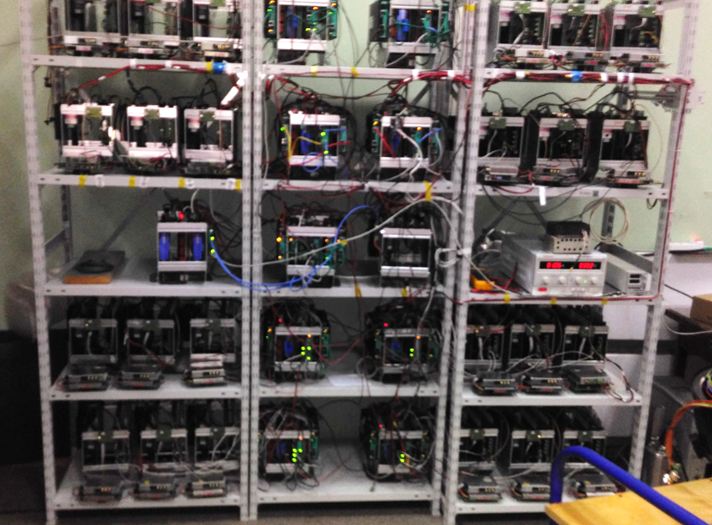
Figure 8. Stand for long-term testing of electronic components of the Baikal-GVD cluster (INR RAS)
Undoubtedly, innovative achievements in the framework of research and development of special equipment for the telescope include a hydroacoustic positioning system for optical modules (telescope geometry), a calibration system based on LEDs and semiconductor lasers, and a telescope synchronization system.
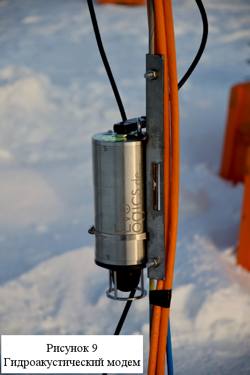
The hydroacoustic positioning system was developed jointly with EvoLogics (Germany). The system consists of 4 fixed hydroacoustic modems attached to the anchors of the garlands in each cluster and five modems on each garland of optical modules (Figure 9). The accuracy of determining the coordinates of moving modems on garlands is 3-4 mm, the accuracy of determining the coordinates of the optical modules themselves using linear-piecewise interpolation of the changing shape of the garland is 10-20 cm - within acceptable values. But the accuracy of the coordinates of the uppermost optical modules at large displacements caused by not yet studied natural phenomena can exceed 20 cm. To eliminate this error, a magnetometric method using inclinometers is currently being investigated. Inclinometers in the form of microchips are installed on electronic boards of optical modules and measure deviations from the vertical with an accuracy of 1°. The combination of hydroacoustic and magnetometric measurements makes it possible to achieve a positioning accuracy of optical modules of no worse than 10 cm at the largest deviations of the garlands from the vertical [3]. The data are based on the results of experimental studies on an operating telescope [4].
The telescope calibration system consists of three levels: calibration of optical modules on a garland using built-in LEDs in each optical module (15-30 m), calibration of OM between garlands using LED matrices placed in a special module - a glass sphere, (60-100 m ), and intercluster calibration using a laser (up to 200-250m).
For intercluster calibration, a unique light source based on a semiconductor laser was developed and installed in the telescope in 2017 (Figure 10).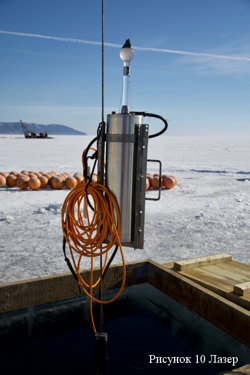
The source consists of the laser light source itself, a deep-sea housing with sealed connectors, a light diffuser and means for attaching the housing to the cable rope. The source has internal control of the parameters of the emitted pulses and software remote control of the amplitude, time and frequency of the emitted pulses with a duration of 1 nanosecond, provides calibration of optical modules at a distance of up to 200-300 m at a wavelength of 532 nm. It is planned to install one laser source on 2 clusters.
Synchronizing the operation of all optical modules and systems of the telescope (about 10,000 objects) with the required accuracy of up to 1 nanosecond is one of the most difficult tasks, which has not yet been fully resolved to date for the telescope being created as a whole. For the existing 5 clusters, in combination with the trigger system of each cluster, an inter-cluster synchronization system is running based on the fiber-optic deep-sea network SSBT developed by SINP MSU and the White Rabbit protocol developed by CERN. Also, a specialized GPS receiver for precise time signals is used to synchronize with world time. Data from these systems are currently being accumulated, their reliability is being analyzed and the possibility of being used in processing physical events is being assessed.
The infrastructure of the telescope on the shores of Lake Baikal was developing at an accelerated pace to ensure the expanding scope of work on the preparation and installation of deep-sea telescope systems. Starting from 2015, with the support of JINR (Dubna), a new coastal center was put into operation at 106 km of the Circum-Baikal Railway, into which all bottom cables from the telescope clusters converge (Figure 11). The Coastal Center (BC) is designed and equipped with all the necessary equipment for uninterrupted power supply to the telescope clusters, collection, primary processing and transmission of data via Radio Internet. The business center is equipped with everything necessary for the work and comfortable rest of duty operators.
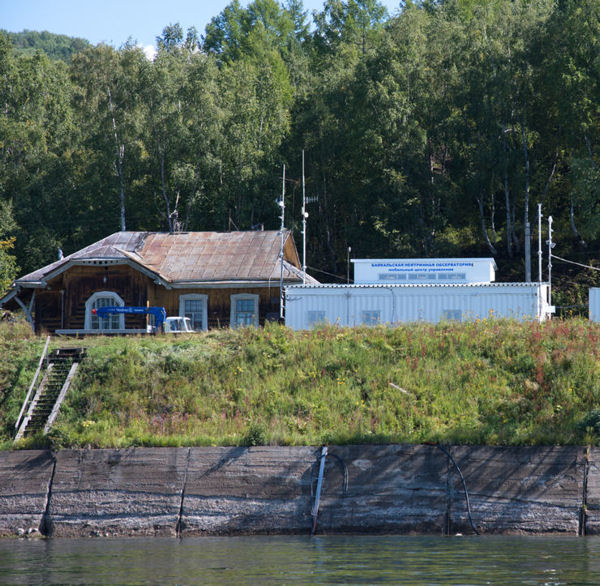
Figure 11. Coastal center
On the territory leased from the Eastern Railway at 106 and 107 km of the Circum-Baikal Railway, with an area of 4.6 hectares, there are laboratory and utility rooms of increased comfort, designed for simultaneous accommodation and food for up to 40 visiting specialists (Figure 12). The machinery and equipment that ensures deep-sea work in the ice camp and laying bottom cables has been almost completely updated. The technology for mounting deep-sea telescope systems has been improved, which made it possible to install and put into operation 2 clusters during winter expeditions from February 15 to April 15.
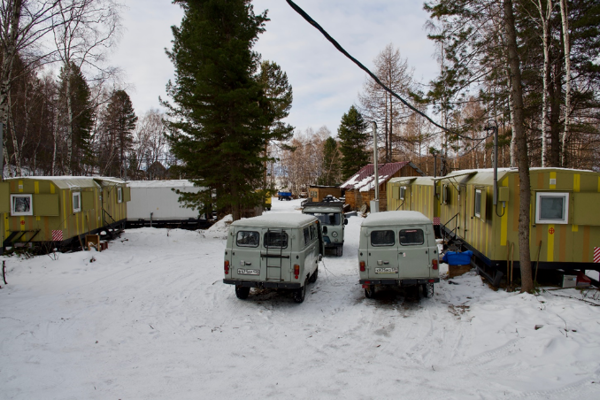
Figure 12. Carriage-houses with cabins for individual accommodation
and vehicles for transporting personnel on the ice of Lake Baikal
The key facility for supporting the expansion and operation of the telescope is the INR RAS division "Baikal Technical Station" (BTS), which is permanently located in 6 buildings for various purposes with a total area of 3447.8 sq.m and on an area of 2.2 hectares in Baikalsk, Industrial site No. 4. BTS carries out a range of works on engineering and technical support for the creation and operation of the Baikal deep-sea neutrino telescope: development and maintenance of engineering networks at 106-107 km of the Circum-Baikal Railway, production of specialized units of the telescope’s supporting structures, transportation of personnel, transportation and storage of scientific equipment supplied from Moscow and other cities and its delivery to the installation site of new telescope systems during winter expeditions, repair of equipment and machinery. Every year several hundred cargoes are transported through Baikalsk by all means of transport except aviation. The BTS vehicle fleet includes 14 vehicles for various purposes, 4 tractors, a speedboat, and a 25-ton truck crane.
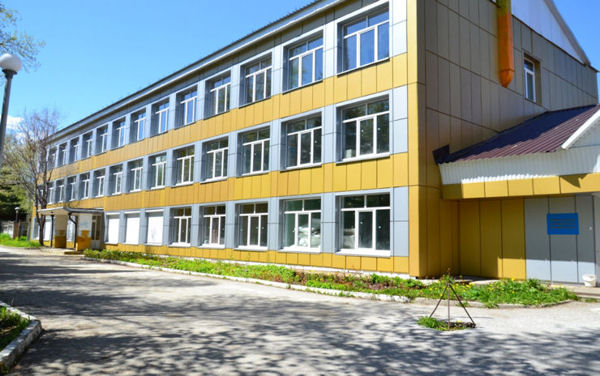
Figure 13. Building letter A. The building houses workshops, storage rooms for valuable scientific equipment, a conference room, laboratory rooms, offices and 3 utility rooms
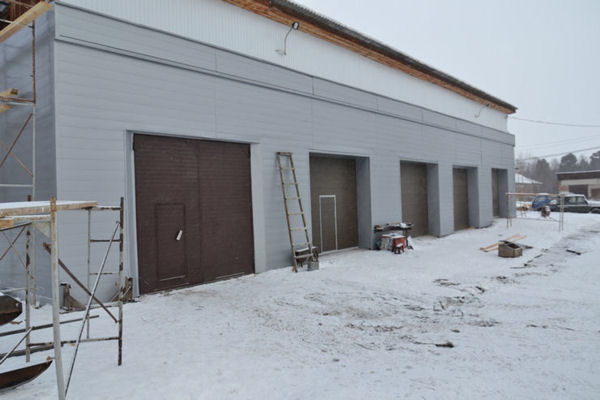
Figure 14. Garage building for 5 cars with a vehicle repair workshop
As a result of a set of activities from 2015 to 2019, scientific results were obtained that are a good contribution to the development of neutrino astrophysics and astronomy, and the infrastructure and material and technical base were created for the expansion and operation of the neutrino telescope in Lake Baikal with an effective volume of the order of a cubic kilometer or more in case of scientific necessity.
Literature
[1] Press release. The first cluster of the cubic-kilometer-scale deep-sea neutrino telescope Baikal-GVD came into operation on Lake. Baikal. Moscow, INR RAS, May 19, 2015
[2] Press release 2019. The Baikal-GVD deep-sea neutrino telescope was increased from three to five clusters of optical modules, and its effective volume was 0.25 km3. INR RAS, Moscow, April 19, 2019
[3] A search for neutrino signal from dark matter annihilation in the center of the Milky Way with Baikal NT200, BAIKAL Collaboration (A.D. Avrorin (Moscow, INR) et al.). Dec 3, 2015. 9 pp. Published in Astropart.Phys. 81 (2016) 12-20 DOI: 10.1016/j.astropartphys.2016.04.004 e-Print: arXiv:1512.01198 [astro-ph.HE]
[4] Sensitivity of the Baikal-GVD neutrino telescope to neutrino emission toward the center of the galactic dark matter halo., A.D. Avrorin (Moscow, INR) et al.. Dec 11, 2014. 6 pp. Published in JETP Lett. 101 (2015) no.5, 289-294 DOI: 10.1134/S0021364015050021 e-Print: arXiv:1412.3672 [astro-ph.HE]
[5] Search for neutrino emission from relic dark matter in the Sun with the Baikal NT200 detector Baikal Collaboration (A.D. Avrorin (Moscow, INR) et al.). May 14, 2014. 9 pp. Published in Astropart.Phys. 62 (2015) 12-20 DOI: 10.1016/j.astropartphys.2014.07.006 e-Print: arXiv:1405.3551 [astro-ph.HE]
[6] S.O. Koligaev. Report: "Baikal-GVD. Calibration." NTO 2019.09.11. LNAVE Archive
Press release 2019.
Contact person:
Avrorin Alexander Valentinovich, e-mail: avrorin@yandex.ru, tel. 8(499)135-61-31, mobile: 8(916)917-99-21